*Enter Volume desired (Gallons) as order Quantity*
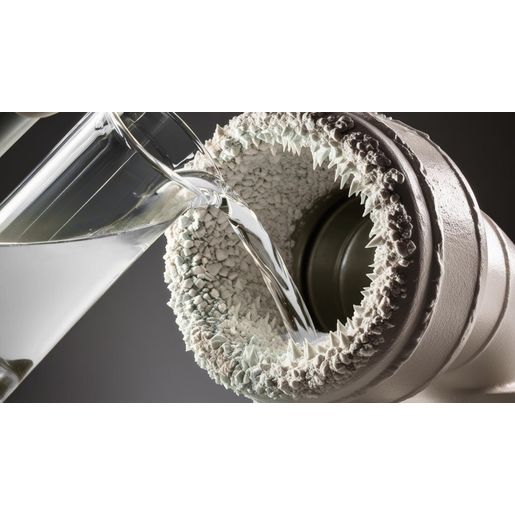
Sulfate scales such as barites can wreak havoc on your operations – causing formation damage, harboring bacteria, and damaging pipes, contaminating tanks, and process equipment. Left untreated, it can reduce production efficiency and profitability.
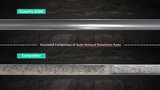
ScaleFix SSDX was designed to have improved dissolution capacity and rate, which optimizes volume/loading and requires less volume to dissolve the same amount of scale compared to other leading treatments.
Armed with an accelerated dissolution rate plus enhanced dissolving capacity, SSDX reduces the need for multiple soaking cycles, saving time and resources. The system works best at temperatures above 104ºF / 40ºC, with treatment times ranging from 8 to 24 hours depending on temperature and level agitation.
Applications
ScaleFix SSDX treatments are performed to remove sulfate scales located downhole:
- Tubulars
- Chokes and valves ( in, over and under DHSV, GLV, ASV, etc. )
- Freeing stuck equipment
- Scale squeeze operations
ScaleFix SSDX can also be used to remove sulfate scale built up in the following surface equipment:
- Entire production / process system
- Pipes separators
- Hydrocyclones
- De-gassers
- Heat-exchangers
- Injection and disposal wells
- Decommissioning projects (scale is removed prior to the piping being recycled)
- Piping and process equipment in oil refineries – Equipment being cleaned at surface (soak equipment in heated bath with circulation
Reduce the need for multiple soaking cycles, saving time and resources.
As a strategically formulated mineral scale dissolver, ScaleFix SSDX is featured with superior dissolution capacity and rate in comparison to other commercially available benchmarks. This allows for higher loading and requires a smaller volume to dissolve the same amount of scale compared to leading alternatives. As a result, ScaleFix SSDX minimizes the need for multiple interventions.
Pros & Limitations
- High scale dissolution capacity per unit mass/volume of dissolver
- Effective at moderate temperatures
- Low corrosion rates to typical metal and elastomer
- Thermal stability up to 350°F
- limited dissolution rate at low temperature ranges